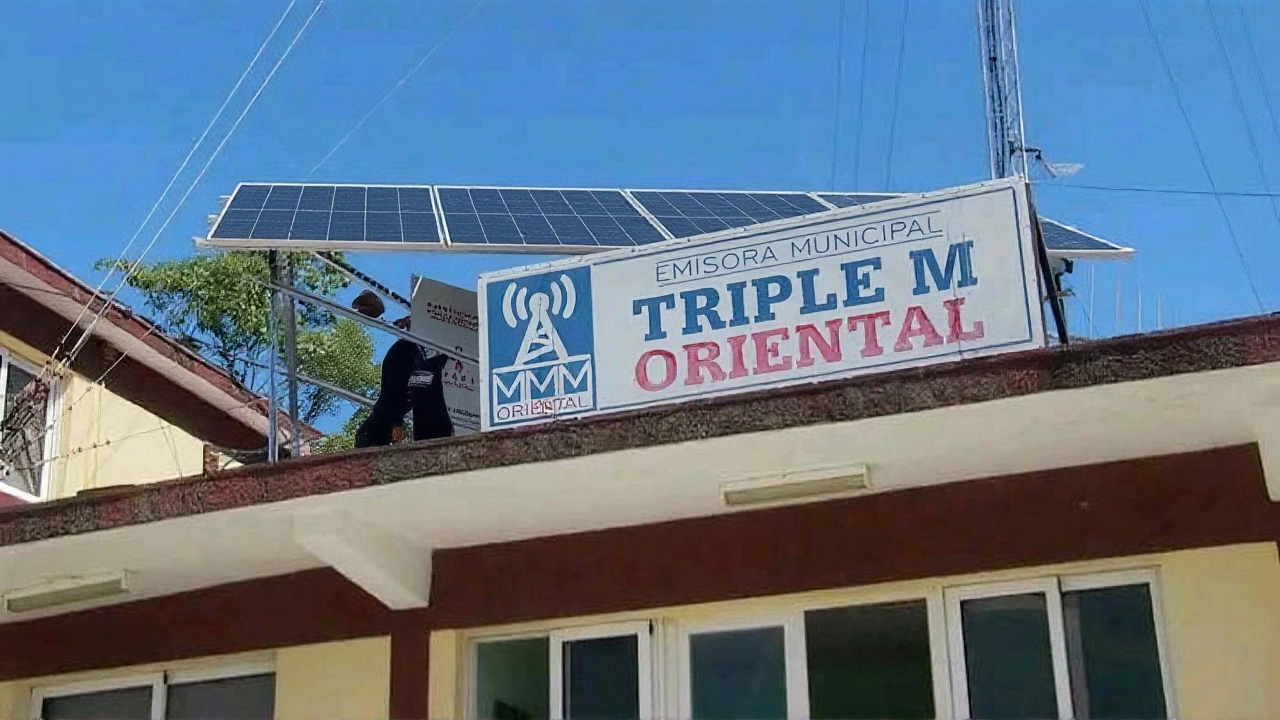
When the lights go out in Santiago de Cuba, the silence usually follows. But not anymore. Thanks to a strategic shift toward renewable energy, the province’s broadcasting network has found a way to keep talking, even when the grid fails.
On May 23, 2026, reports emerged from Vietnamese media outlet Báo Dân Việt, republished on Vietnam.vn, highlighting a resilient infrastructure project in eastern Cuba. The story centers on a provincial radio system comprising 11 radio stations that have been equipped with large-scale solar panels. This upgrade ensures that critical information continues to reach residents during frequent power cuts—a common occurrence in the region due to aging infrastructure and extreme weather events.
Keeping the Signal Strong
Here’s the thing: radio isn’t dead; it’s just evolving. In places like Cuba, where internet connectivity can be spotty and electricity unreliable, AM and FM radio remain the primary lifeline for news, emergency alerts, and community connection. The installation of these solar arrays represents more than just an environmental choice—it’s a matter of public safety and social stability.
The details are still somewhat sparse regarding the technical specifications of the panels or the exact cost of the project. However, the impact is clear. By decoupling their broadcast capabilities from the national electrical grid, these 11 stations have created a self-sustaining communication loop. When storms hit or maintenance issues cause blackouts, the transmitters stay live. For local families, this means they don’t have to wait for the power to return to know if roads are closed, if water supplies are safe, or what the government’s latest directives are.
"Solar panels allow the 11 radio stations in Santiago de Cuba to continue delivering vital information to people even during power outages," the report stated. It’s a simple sentence, but it carries significant weight. In a country where energy crises are a regular part of daily life, having a guaranteed source of information is invaluable.
A Model for Energy Resilience
This move by the Santiago de Cuba broadcasting authority aligns with broader global trends in media infrastructure. We’ve seen similar initiatives in disaster-prone areas across Southeast Asia and the Caribbean, where broadcasters invest in backup power systems to maintain service continuity. What makes this particular case interesting is the scale—covering an entire province’s network rather than just a single flagship station.
But wait, why now? While the specific timeline for the installation isn’t detailed in the initial reports, the push likely correlates with increasing frequency of severe weather events affecting the island. Hurricanes and tropical storms often cripple Cuba’s power grid for days or weeks. By leveraging sunlight—a resource abundant in the tropics—the broadcaster has turned a vulnerability into a strength.
Interestingly, the absence of specific financial data or vendor names suggests this might be a phased rollout or a locally sourced solution. Sometimes, the most effective innovations aren’t the flashiest tech imports but practical adaptations to local conditions. Using large-format solar panels indicates a serious commitment to capacity, ensuring that battery banks can sustain transmission equipment through nights and cloudy periods.
The Human Impact
For the average listener in Santiago de Cuba, the difference between a powered-down station and a solar-backed one is profound. Imagine waking up after a hurricane to find your phone useless because the cell towers are down, but your old transistor radio is playing updates from the civil defense authorities. That’s the reality this project creates.
It also underscores the enduring role of traditional media. In an age obsessed with digital streaming and social media feeds, this story reminds us that analog technologies, when paired with modern renewable energy solutions, offer unmatched reliability. The 11 stations act as nodes in a decentralized network, each capable of operating independently if needed.
There’s no mention of individual engineers or officials behind the project in the available snippets, which leaves some questions unanswered. Who designed the system? How long did it take to install? These are gaps in the current reporting. Yet, the outcome speaks for itself: uninterrupted communication in times of crisis.
What’s Next for Cuban Broadcasting?
If this pilot program proves successful, we could see similar upgrades across other provinces in Cuba. The model is replicable: assess the broadcast needs, calculate the solar capacity required, and install robust storage systems. Given the high solar irradiance levels in the Caribbean, the return on investment for such projects is typically favorable over time, despite upfront costs.
We should also watch for potential partnerships with international organizations focused on climate resilience. Groups like the United Nations Development Programme (UNDP) or regional bodies often support such infrastructure improvements in developing nations. If Cuba seeks further assistance to expand this network, these entities could play a key role.
Ultimately, this story is about more than just watts and volts. It’s about keeping communities connected. In a world increasingly defined by disruption, the ability to broadcast clearly, consistently, and reliably is a form of resilience that cannot be overstated. As long as the sun shines, Santiago de Cuba will have a voice.
Frequently Asked Questions
How many radio stations in Santiago de Cuba use solar power?
According to reports from May 2026, there are exactly 11 radio stations within the provincial broadcasting system in Santiago de Cuba that have been equipped with large-scale solar panels. This network-wide upgrade ensures consistent coverage across the region.
Why is solar power important for radio stations in Cuba?
Cuba frequently experiences power outages due to aging infrastructure and severe weather events like hurricanes. Solar power allows radio stations to operate independently of the national grid, ensuring that critical emergency information and news continue to reach the public during blackouts.
Which media organization reported on this development?
The news was originally reported by the Vietnamese newspaper Báo Dân Việt on May 23, 2026. The article was subsequently republished on the multilingual platform Vietnam.vn, including a Hindi-language version, highlighting the international interest in Cuba’s energy resilience efforts.
Are there details about the cost or technical specs of the solar panels?
Currently, specific financial details, such as the total investment cost or the wattage of the installed panels, are not publicly available in the initial reports. The focus of the coverage remains on the operational benefit—maintaining broadcast continuity during power failures—rather than the technical or economic specifics.
Does this mean all radio stations in Cuba are solar-powered?
No, the report specifically highlights the provincial network in Santiago de Cuba, consisting of 11 stations. While other regions may have similar initiatives, this announcement pertains exclusively to the infrastructure upgrades in the Santiago de Cuba province as of May 2026.





Write a comment