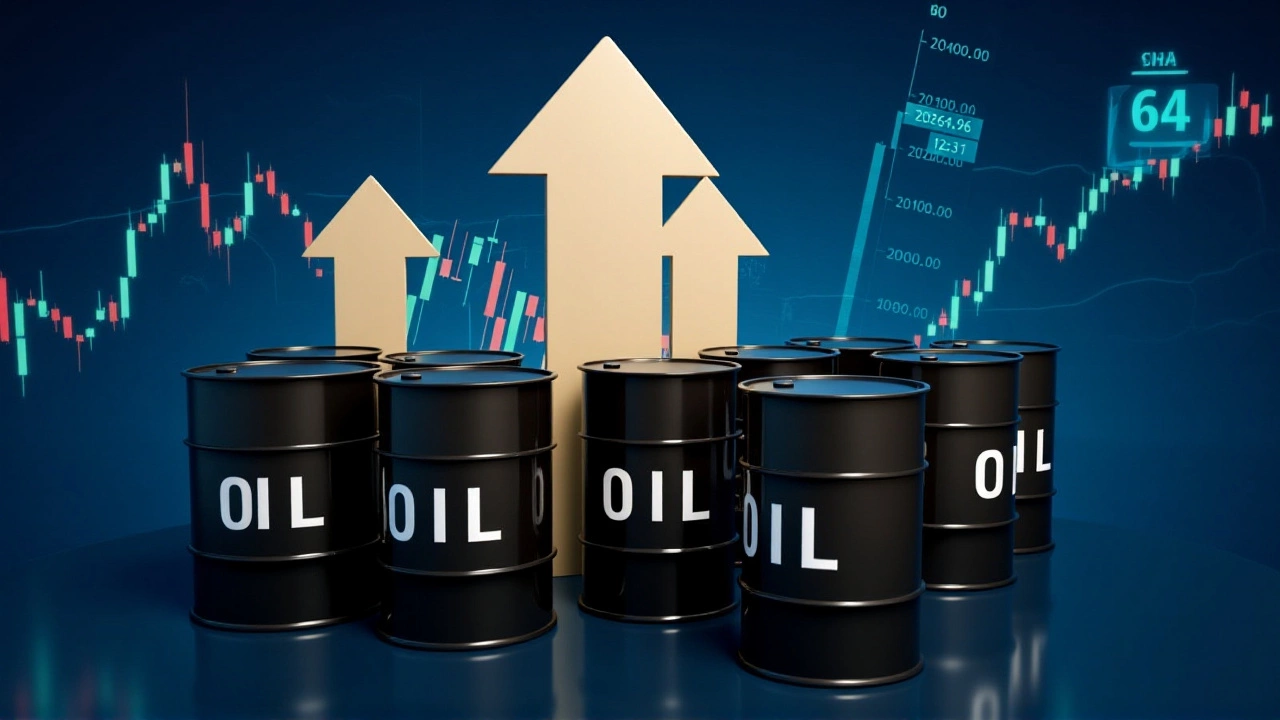
When India's economy braced for another round of fuel inflation, the international markets delivered a surprise twist. Crude oil prices have crashed significantly, easing the immediate pressure on the world's third-largest importer of crude. The drop isn't just a blip; it’s a structural shift that analysts say could keep liquefied petroleum gas (LPG) cylinders off the headlines and stabilize domestic fuel costs for months to come.
The volatility has been stark. Just weeks ago, benchmarks like Brent CrudeGlobal Markets were trading near $80 per barrel. Then came the spike—driven by geopolitical tensions in West Asia—that briefly pushed prices toward $112 a barrel, marking a 56% surge in just 30 days. But here’s the thing: that fear premium is evaporating. With supply chains stabilizing and non-OPEC nations ramping up production, experts are now eyeing a return to the $60–$70 range.
The Geopolitical Premium Fades
Turns out, the market was pricing in worst-case scenarios. For months, traders added a "risk premium" of roughly $15 to $20 per barrel due to conflicts in the Middle East and disruptions in shipping routes. That extra cost hit importers like India hard, straining the current account deficit and putting upward pressure on the rupee.
But wait—the narrative is shifting. If geopolitical tensions ease and supply flows freely from the United States and other non-OPEC producers, that risk premium disappears. Analysts note that without the war-related scare, the fundamental supply-demand balance favors lower prices. This isn't speculation; it's math. When supply exceeds demand, prices fall. And right now, barrels are flowing more freely than they did three months ago.
One commodity expert pointed out during a recent business bulletin that while gold saw some safe-haven demand, it wasn't enough to offset the downward trend in crude and natural gas. Base metals like zinc also dipped, signaling broader economic caution. The takeaway? The market is calming down, and India is breathing easier.
Government Moves to Secure Gas Supply
While global prices fluctuate, domestic policy is catching up. The Indian government didn't sit idle. Recognizing the potential for LPG shortages amid high crude costs, the Ministry of Petroleum and Natural Gas announced a critical adjustment: increasing the allocation of commercial LPG to states from 30% to 50%. That’s a 20 percentage-point jump designed to ensure industries and households don’t face scarcity.
This move is part of a broader strategy. High-level meetings involving ministries responsible for chemicals, pharmaceuticals, and petrochemicals focused on short-, medium-, and long-term solutions. The goal? To prevent any major disruption in gas supply despite international volatility. A key pillar of this plan is expanding the Piped Natural Gas (PNG) network. By pushing more households and businesses onto pipelines, the reliance on cylinder-based LPG drops, reducing vulnerability to spot-market shocks.
It’s a smart hedge. Even if crude prices rebound, a robust PNG infrastructure acts as a buffer. Plus, with cheaper crude imports, the financial burden on public sector undertakings like Indian Oil Corporation Limited, Bharat Petroleum Corporation Limited, and Hindustan Petroleum Corporation Limited lessens. They can maintain stable retail prices without eating into their margins excessively.
The Russian Discount Factor
Here’s an angle often overlooked: India’s strategic pivot toward Russian crude. Over the past three years, Indian refineries have saved at least $12.6 billion (approximately ₹111 billion) by importing discounted Russian oil, according to reports cited by The Indian Express. Today, over one-third of India’s crude imports come from Russia.
That discount has acted as a shock absorber. Had India bought that volume at prevailing global market rates, the fiscal impact would have been severe. Instead, the savings helped cushion the blow of higher global prices earlier in the year. It’s a pragmatic approach: buy where it’s cheap, refine it, and sell domestically or export surplus. This strategy has kept India’s energy bill manageable even when Brent crude touched triple digits.
What Does This Mean for Consumers?
For the average citizen, the implications are direct. Lower crude prices mean less pressure on petrol and diesel prices. While tax structures and exchange rates still play a role, the base cost of refining has dropped. More importantly, the fear of LPG cylinder shortages is receding. With increased commercial allocations and expanded PNG access, the supply chain is tighter.
However, experts warn against complacency. If geopolitical tensions flare up again—or if production facilities in key regions remain damaged for four to six months—prices could theoretically spike to $140–$150 per barrel. That scenario remains unlikely but possible. For now, though, the outlook is positive. The current trajectory suggests stability, not chaos.
Frequently Asked Questions
Will petrol and diesel prices drop immediately?
Not necessarily overnight. Retail fuel prices depend on multiple factors including excise duties, state VAT, and the rupee-dollar exchange rate. However, the drop in crude costs gives oil marketing companies room to absorb some inflation or pass on savings gradually. Expect stability rather than a sudden crash in pump prices.
Why was LPG supply a concern?
High crude prices often lead to reduced production or export restrictions on LPG, causing domestic shortages. To counter this, the government increased commercial LPG allocation to states from 30% to 50%, ensuring industries and hospitals get priority access while household demand is met through subsidized channels and expanded PNG networks.
How much has India saved by buying Russian oil?
According to analysis cited by The Indian Express, Indian refineries have saved approximately $12.6 billion (around ₹111 billion) over the last three years by purchasing discounted Russian crude. This accounts for more than one-third of India’s total crude imports, providing a significant fiscal buffer against global price spikes.
Could oil prices rise again sharply?
Yes, if geopolitical tensions escalate or supply disruptions persist. Experts warn that if conflicts continue for four to six months without resolution, prices could theoretically reach $140–$150 per barrel. However, current trends show de-escalation and increased non-OPEC supply, making a moderate range of $60–$70 more likely in the near term.




Write a comment